Selected papers are grouped by theme below. A complete list is on the Publications page.
Learning-Augmented Optimization
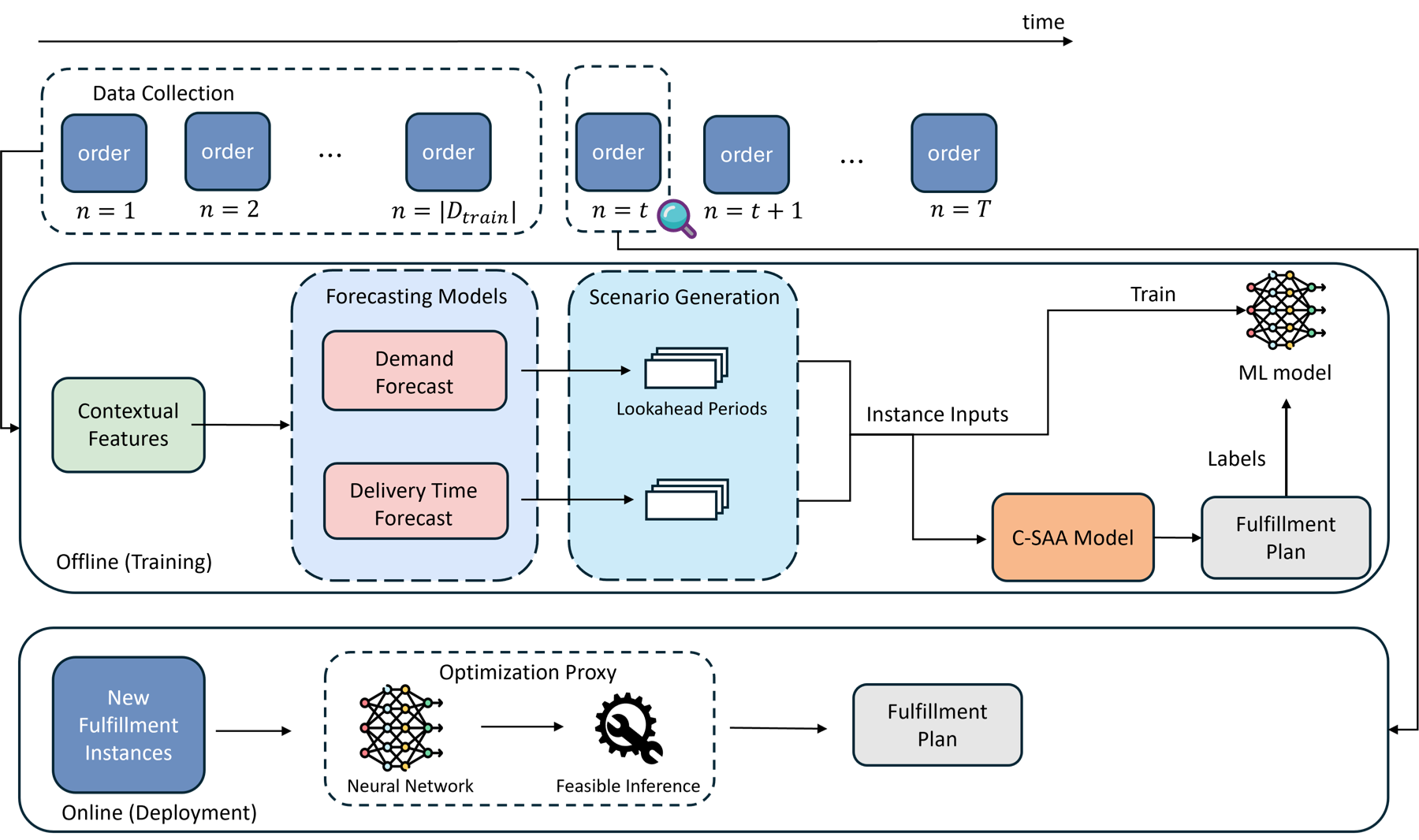
Many operational problems must be solved repeatedly under tight time limits, such as assigning each incoming online order to a fulfillment center and carrier, or planning paratransit trips jointly with crew shifts. At this scale, exact solvers are often too slow. This line of work uses machine learning to accelerate optimization, either by training optimization proxies that reproduce solver decisions in real time or by using graph neural networks to speed up column generation.
Representative work
Contextual Optimization and Decision-Focused Learning
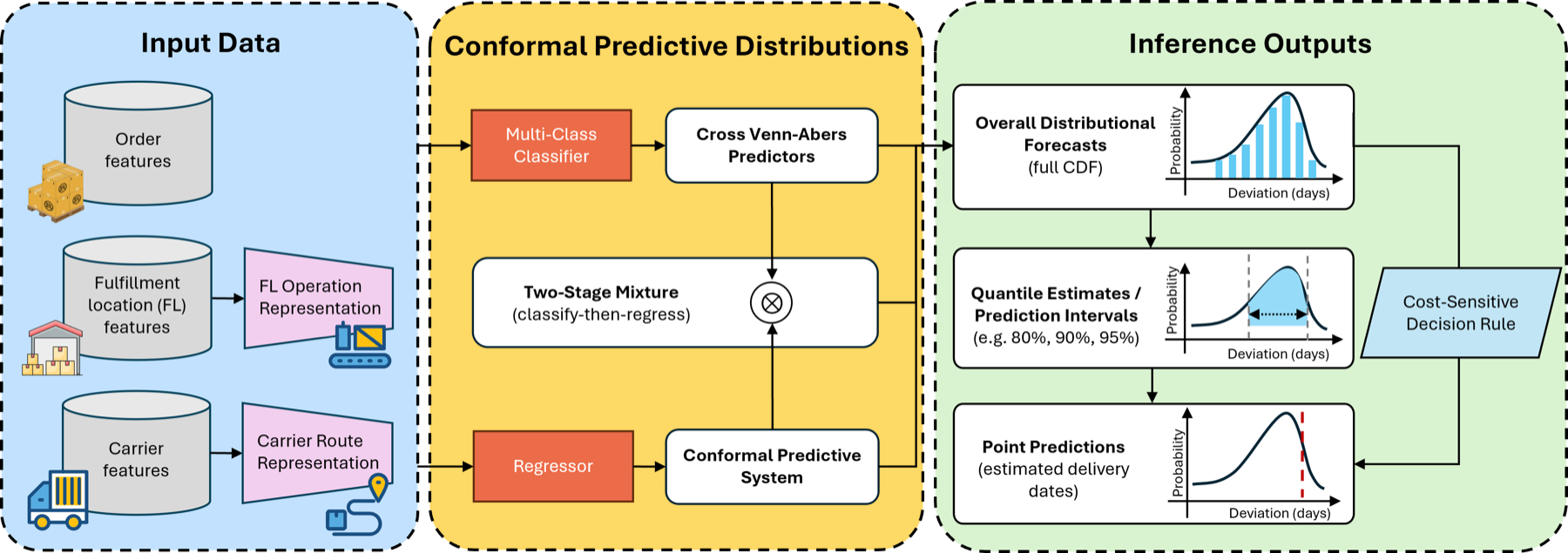
Operational decisions often depend on quantities that are unknown at decision time but partly predictable from data, such as carrier delivery times or customer choices. This line of work couples prediction and optimization, which are usually handled in separate steps. It uses conformal predictive distributions to supply calibrated uncertainty to stochastic and robust fulfillment models, and develops decision-focused learning methods that train predictive models on the cost of the decisions they induce, including under partial feedback and customer choice.
Representative work
Agentic Operations Research
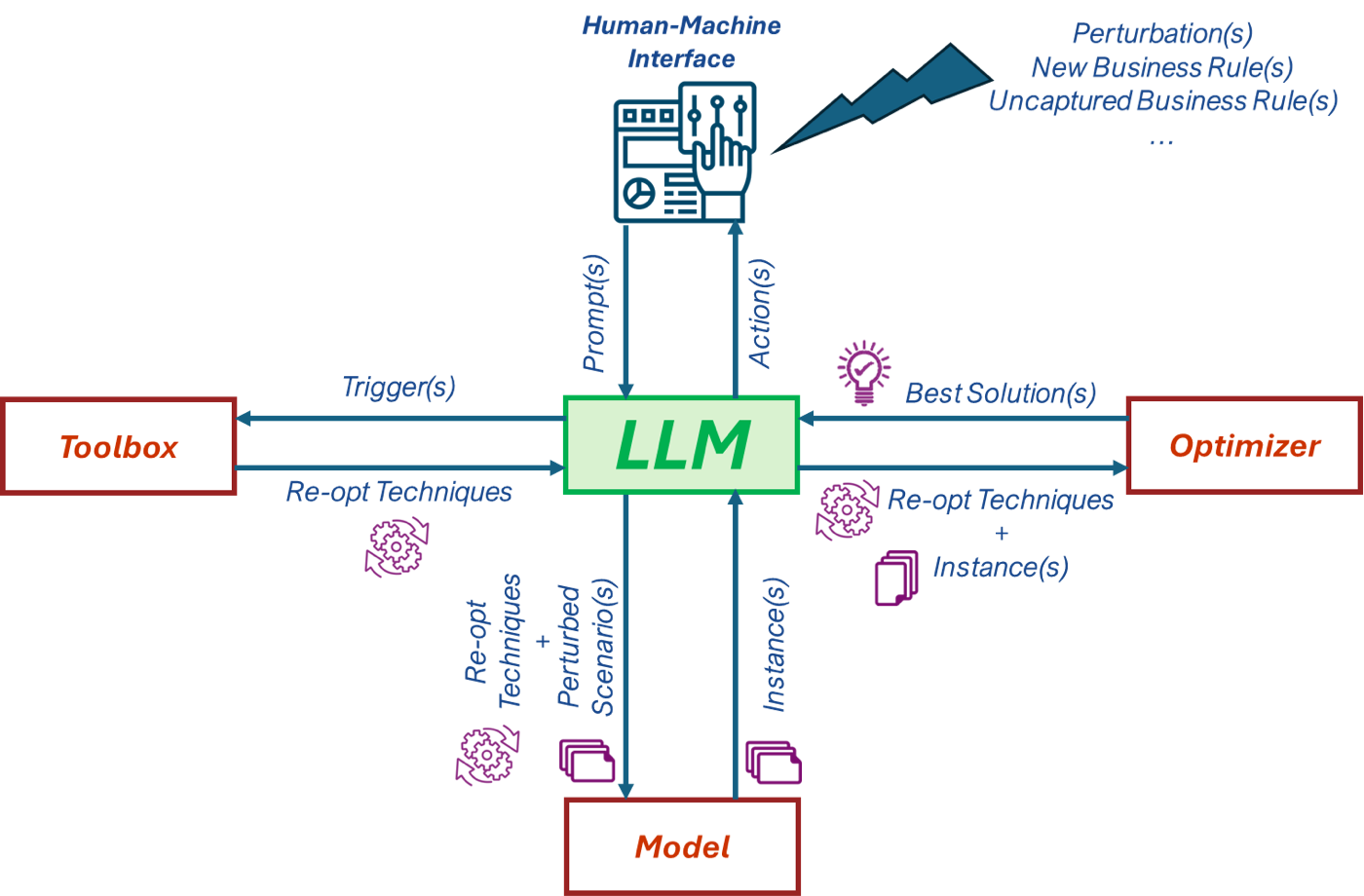
Optimization models deployed in practice must be revised as business rules, priorities, and operating conditions change, and each revision usually requires a modeling expert. This line of work develops LLM-based agents that let decision-makers state such changes in natural language. The agents translate requests into structured patches to deployed large-scale models, select re-optimization methods to solve the updated instances, and elicit qualitative preferences to choose among solutions with competing objectives.